AI
AI Agents for Ecommerce: What They Actually Do With Your Product Data
Qooly AI EditorialOctober 31, 2026 · 5 min read

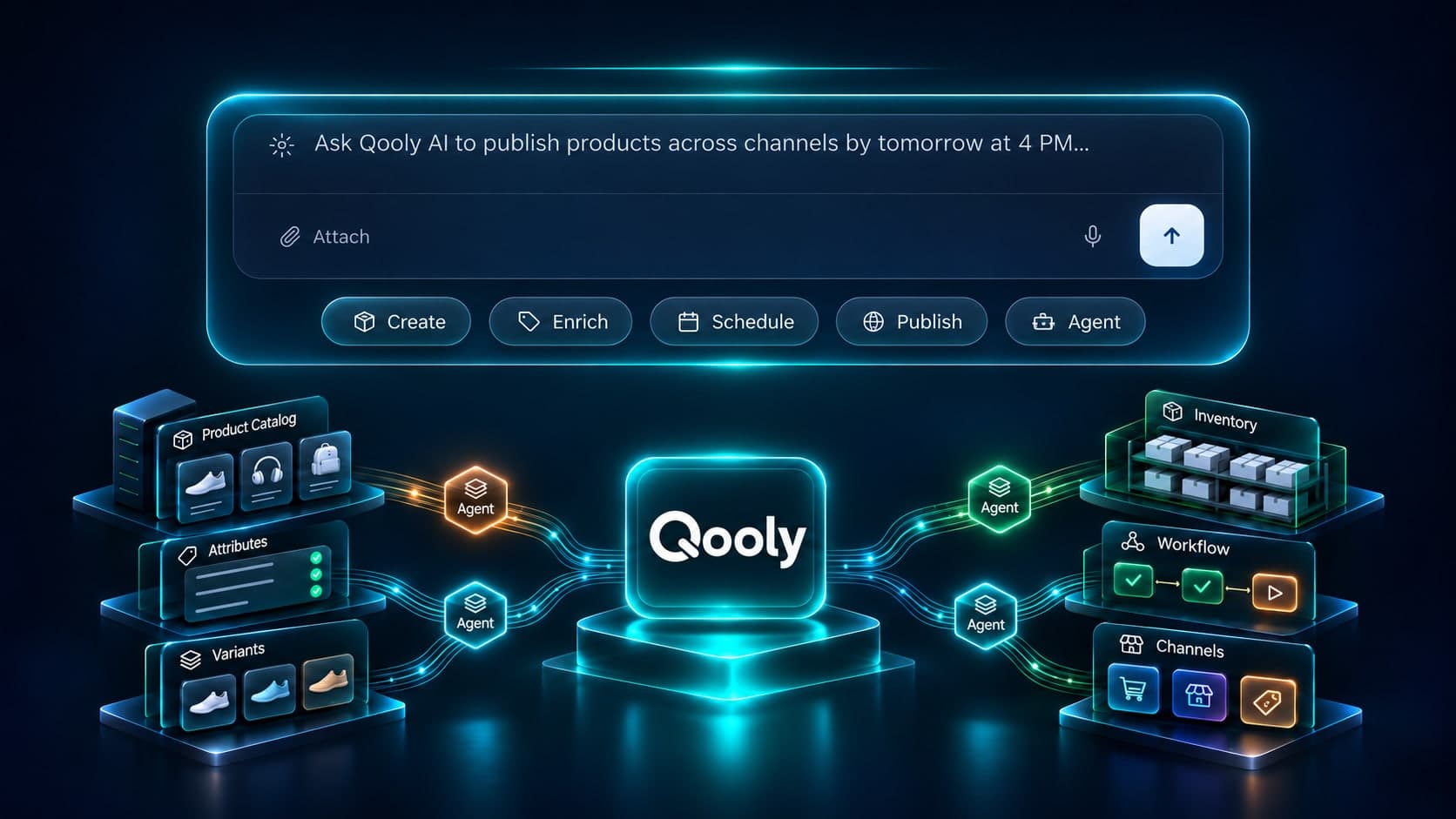
Some brands launch channels in a day, keep 40,000 listings accurate without a data team, and enter new markets on a whim. They're not working harder than you. They're running a different architecture.
It's not adding a chatbot to your existing tools. Bolting an assistant onto a legacy product data system gives you a faster way to operate a slow system: the pipeline underneath is unchanged.
In a traditional stack, data flows between systems through connectors, transformations, and manual checkpoints. Humans sit at every junction: cleaning data, mapping fields, approving exports. The humans are the intelligence; the software is plumbing.
In an AI-native stack, the intelligence is the infrastructure. Data flows through a layer that understands context (that this "45" is a EU shoe size and that one is a chest measurement in centimetres), learns your catalog's patterns, and makes the thousands of small decisions that used to queue up for a person.
The difference in practice:
| Task | Traditional Stack | AI-Native |
|---|---|---|
| Enrich 1,000 new SKUs | 2 to 3 weeks | 2 to 3 hours |
| Launch on a new channel | 4 to 6 weeks | Same day |
| Fix a taxonomy mismatch | Custom dev work | Auto-resolved |
| Update pricing sitewide | Scheduled batch | Real-time |
| Catch a broken listing | Customer complaint | Continuous validation |
That last row is the one legacy vendors don't talk about. Traditional stacks validate data at import. AI-native stacks validate it continuously, so the drift that normally accumulates between cleanup projects simply never accumulates.
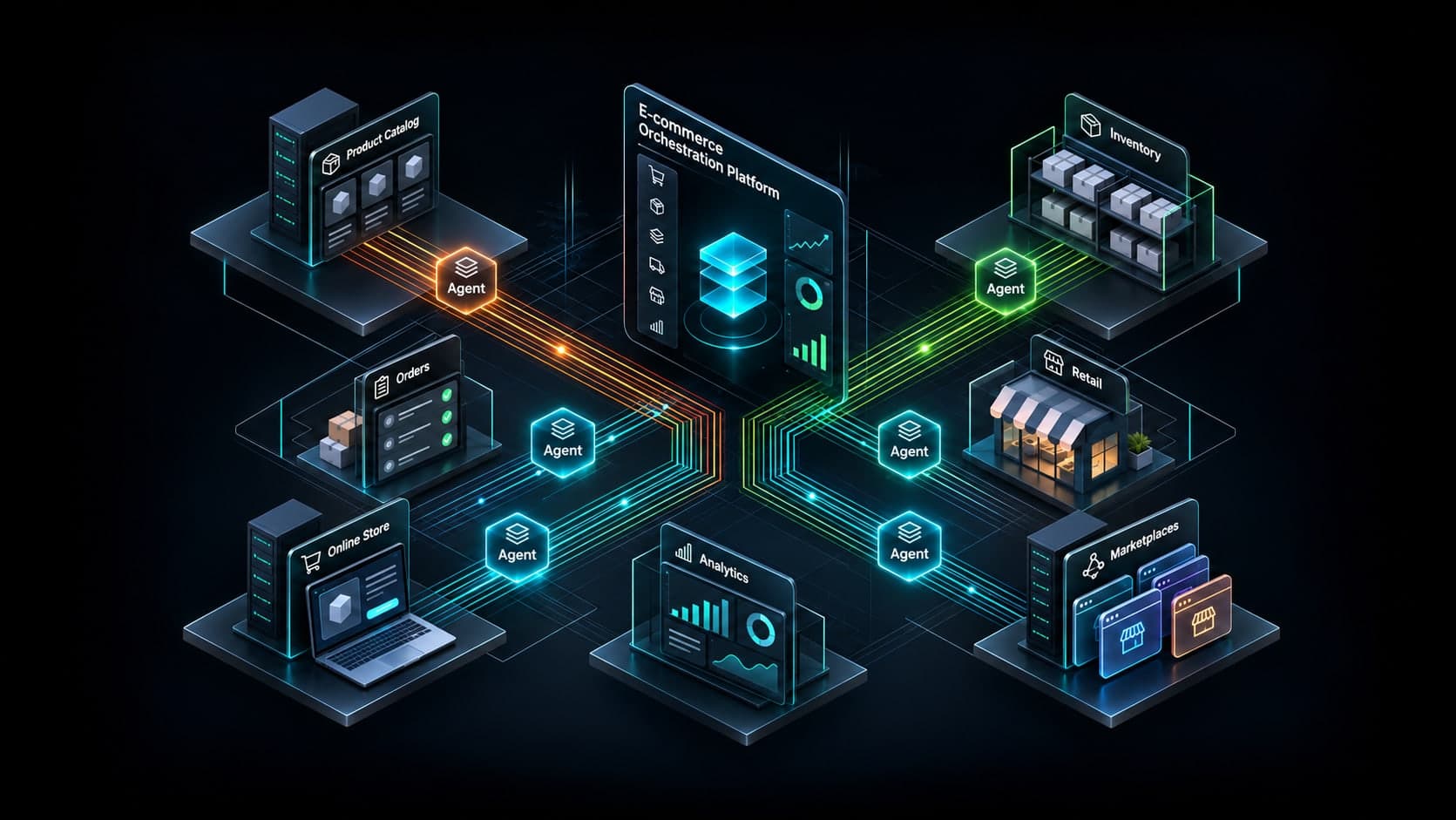
Three layers, one system:
1. Universal Ingestion. Connect anything: ERP, spreadsheet, supplier feed, a legacy catalogue system you're sunsetting. The AI normalizes it into a unified model on the way in, instead of demanding you clean everything to its template first. This inverts the standard implementation: legacy onboarding runs for months largely because you do the conforming.
2. Intelligence Layer. The AI enriches, validates, and optimizes continuously. It learns your brand voice from your best listings, knows each channel's requirements because it reads the specs directly, and holds your quality bar on SKU number 39,000 exactly as it did on SKU number 12.
3. Omnichannel Distribution. One catalog, pushed natively to every endpoint: Amazon, Shopify, Google, wholesale portals, retail systems. No per-channel connector to maintain, because channel formatting is something the intelligence layer does, not a product you buy.
Compare the parts list. The traditional version of this is a product data system, a separate asset library, a syndication tool, an iPaaS to wire them together, and one to two FTEs to keep the wiring alive. Call it £300 to 500K a year. The AI-native version is one platform and a fraction of the headcount.
Product data quality converts. Listings with complete, optimized content convert at 2 to 4x the rate of thin ones, and marketplace search buries products with missing attributes. When an AI layer maintains that quality continuously (not quarterly, during a cleanup sprint), every listing performs at its ceiling all the time, including the long tail no human team would ever get to.
The brands winning in 2026 aren't the ones with the biggest teams or the most integrations. They're the ones who made product data a strength instead of a liability.
Keep reading