AI
Just Ask Qooly AI: Running Product Data Through a Conversation
Qooly AI EditorialOctober 31, 2026 · 5 min read

"AI agent" has become one of the most used phrases in commerce, and one of the least defined. For a commerce team the useful question isn't whether software is agentic. It's this: what job does it own, and can I trust it to do that job without someone watching?
This article looks at what AI agents concretely do with product data, inventory and pricing, using the agents in Qooly AI as examples.
A script runs when you tell it to. A chatbot answers when you ask. An agent owns an outcome. It watches for something to change, decides what to do under the rules you've set, acts in the connected systems, and records what it did.
For product data that matters, because the work never ends. New products arrive incomplete, channels change their requirements, stock moves by the minute and prices change with every campaign. Work that never ends is exactly the work agents are for.
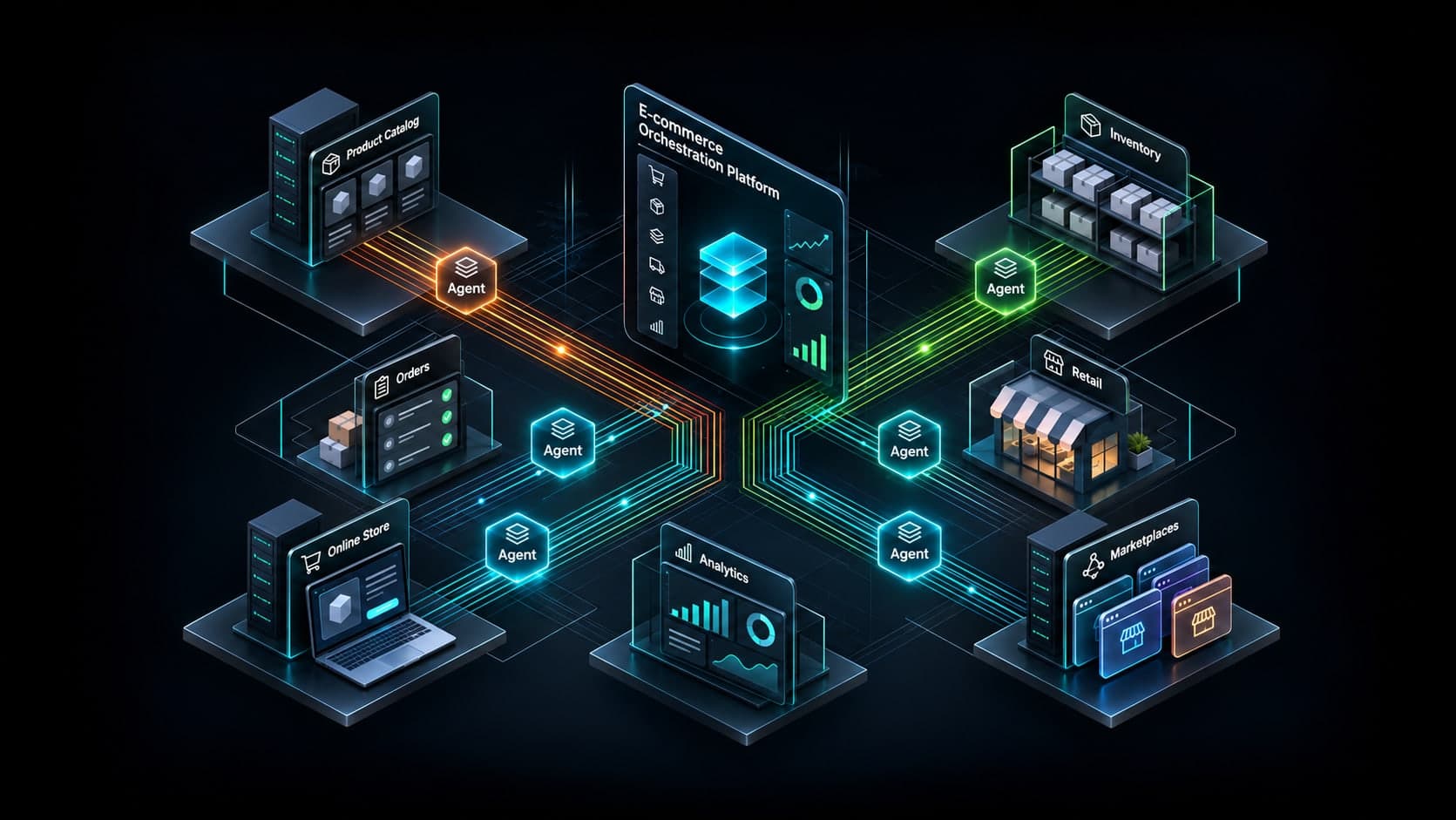
Agent Flow takes products from raw data to live listing. It ingests from an ERP, flat files, APIs or EDI and maps everything to your catalog. It fills missing fields, writes channel-optimised descriptions and generates titles. It validates every product against each channel's requirements, and publishes the moment a product passes. Where data conflicts, it catches them before they reach a channel.
Agent Sync is the connective tissue. Every product change, whether a new price, a new image or an edited description, is transformed into exactly what each channel expects and distributed to every connected channel. If a sync fails, it detects the failure and retries, so a listing doesn't quietly break.
Agent Stock aggregates stock from every location into one live view per SKU and keeps available-to-sell current on every channel. It raises low-stock alerts, creates reorder signals based on your rules, and flags or hides listings approaching zero so you don't oversell.
Agent Price derives each sale price from the list price, the product's status and the discount rates that apply, resolving brand, category and product-level rates in a defined order. It refuses to publish a price that would breach the margin floor you set, and records the inputs behind every price so any number can be explained later.
Agent Scheduler is the clock and the gatekeeper. It lists a product the moment its completeness clears the bar you set for a channel, opens and closes campaigns at exact times, and acts when stock reaches an age you define. It chains the other agents together, so "enrich, then list, then sync" is one rule instead of several jobs.
The value multiplies when agents hand work to each other. A seasonal campaign is a good example:
No spreadsheet, no overnight batch and no one remembering to switch prices back on Monday morning.
An agent with access to your catalog and channels is powerful, so the boundaries matter as much as the capabilities:
We go deeper on this in governed AI for product data.
At Mavi, Qooly AI's agents run product and inventory operations across more than 16 sales channels connected to SAP S/4HANA. Agent Stock processes more than 2 million inventory updates a day and over 60 million inventory transactions a month, keeping stock available for sale across warehouses, marketplaces, ecommerce platforms and stores.
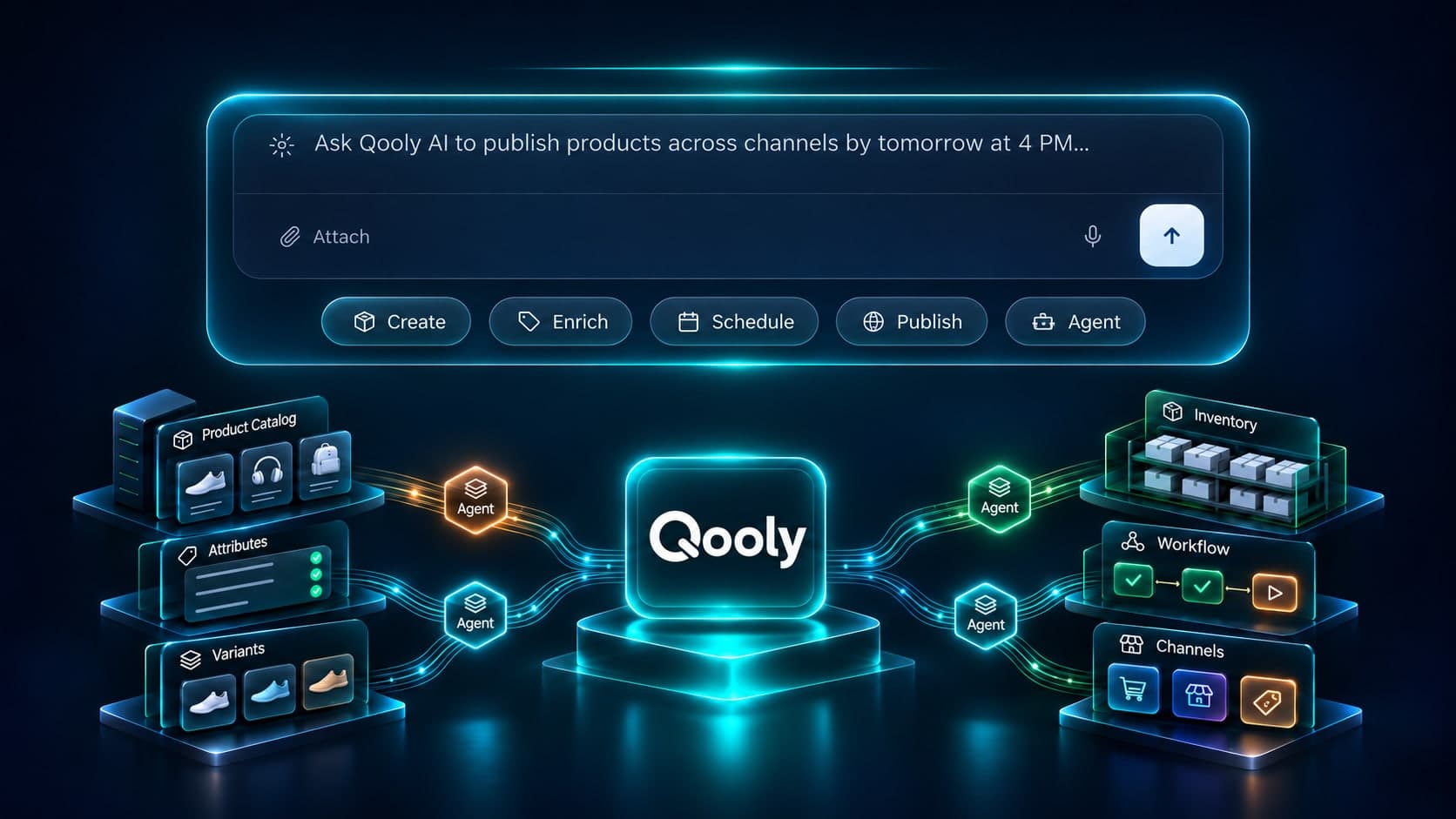
You don't need to automate everything at once. Most teams start with the job that costs them the most manual hours, often enrichment and publishing for a key channel, and add agents from there. In Qooly AI you can also put agents to work simply by asking.
An AI agent is software that owns a job end to end: it watches for something to happen, decides what to do under the rules you set, acts in the connected systems, and records what it did. In ecommerce that job might be enriching product data, publishing to channels, syncing inventory or calculating prices.
Automation rules run a fixed action when a trigger fires. AI agents can also handle the parts that need judgement, such as writing a missing description, reading attributes from an image or reshaping content for a channel, while still working inside rules and approvals you define.
They are when they are governed. Agents should validate against your rules before publishing, wait for approval where a person needs to decide, refuse changes that break limits such as a margin floor, and keep a full record of every change.
Qooly AI's agents include Agent Flow for the product data pipeline, Agent Sync for channel distribution, Agent Stock for inventory, Agent Price for rule-based pricing and Agent Scheduler for timing, with more on the way. See them work on your data.
Keep reading