
AI
AI Agents for Ecommerce: What They Actually Do With Your Product Data
Qooly AI EditorialOctober 31, 2026 · 5 min read

Ask an AI assistant to find you a waterproof shell jacket under £200 that works for commuting. It will name three or four. Not a results page: a short list, already filtered, already justified.
Your brand is on that list or it isn't. There's no page two to climb to, no impression you can buy back, no position six quietly collecting the leftovers. For the first time in commerce, discovery has a hard cut, and most brands have no idea which side of it they're on.
The instinct is to treat this as SEO with a new acronym. It isn't. Search engines rank documents; answer engines assemble claims. Ranking rewards the page that best matches a query. Being named rewards the product whose facts an engine can extract, verify against somebody else, and restate without getting it wrong. Those are different jobs, and the second one is mostly a data problem.
Facts in fields, not in prose. An engine asked "will it fit a 24-inch opening?" needs a dimension, not a paragraph about craftsmanship. If the answer only exists inside marketing copy, it's a sentence the model has to interpret, and a sentence it may decline to stake an answer on. Every attribute you leave blank is a question you've opted out of.
An identity that resolves. GTIN, MPN, brand, exact variant. This is how an engine works out that your listing, the retailer's listing and the review site's listing are the same object. Without it you aren't one product with corroboration from three places. You're three unrelated things, none of them confident.
Agreement across sources. Models lean on consensus. When your own site says 2.4kg, the marketplace says 2.6kg and a stockist says "about 2.5", the safe move is to recommend something less contradictory. Disagreement between your channels isn't untidy; it's disqualifying.
Current data. A discontinued colourway still live on two retailers, a price you changed in March and a spec sheet from last season all teach the same lesson: this catalogue can't be relied on right now.
You can measure this on a Tuesday afternoon, without buying anything.
Write twenty questions a real buyer would ask: by use case, by constraint, by budget, by comparison. Not your brand name; that's a vanity check. Run them across the assistants your customers actually use, record which brands get named, which get described accurately, and which sources the engine leans on when it explains itself.
Three things fall out of that list immediately: how often you appear at all, what the engine thinks is true about you, and which third parties are speaking on your behalf. The second is usually the uncomfortable one. Most teams discover the machine is confidently repeating a spec they corrected eighteen months ago, sourced from a retailer feed nobody owns.
Re-run it monthly. Movement is the metric.
Nothing above is a content exercise. You cannot write your way to attribute coverage you don't have, and you cannot make four channels agree by editing one of them. The answer a machine gives about your product is assembled from the data you've published everywhere, so the fix sits in the catalogue, not the copy.
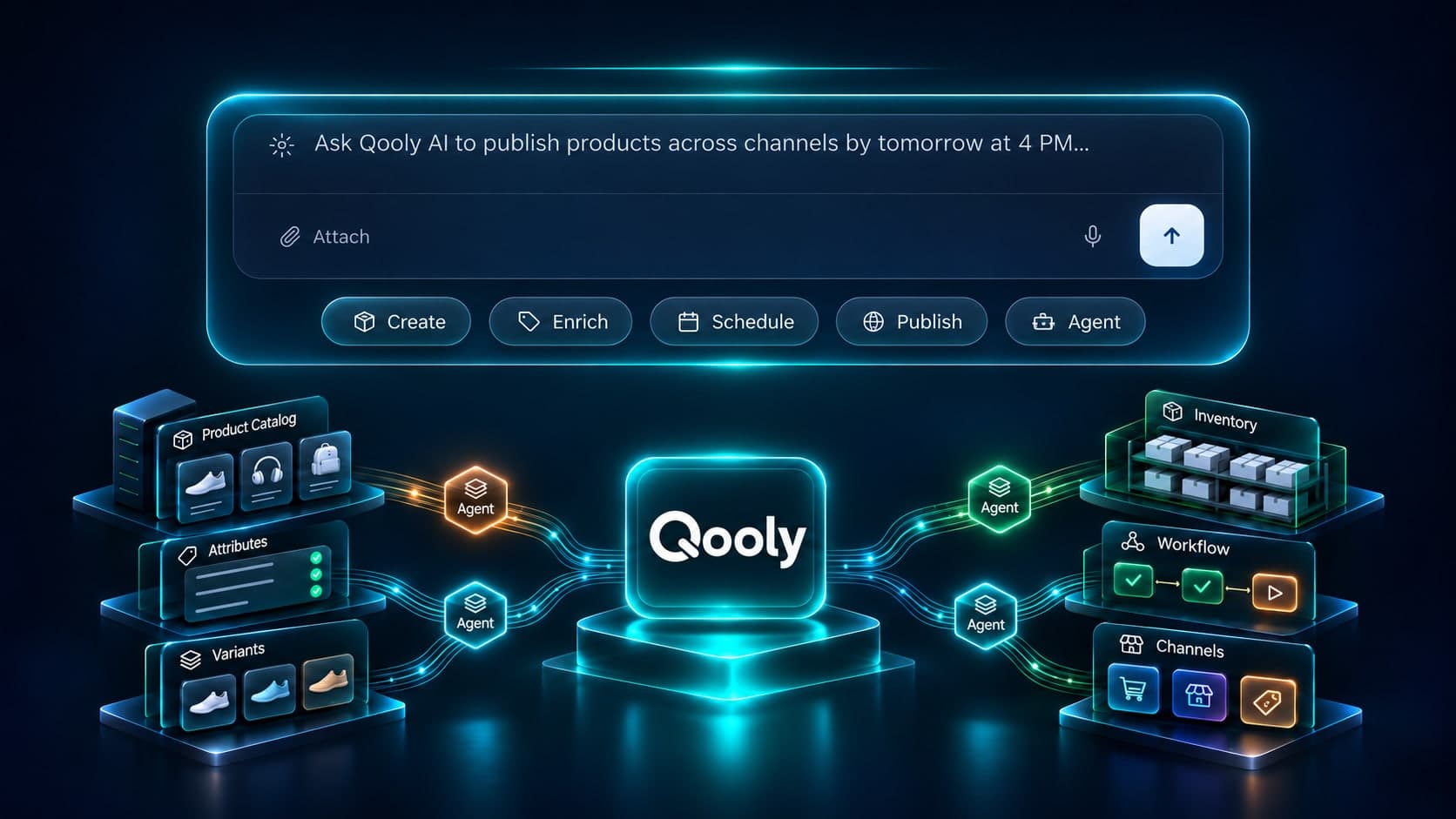
That's the work Qooly does: filling attribute gaps so the facts exist as fields, holding one identity across every destination so your listings corroborate each other instead of competing, validating against each channel's requirements before anything goes out, and pushing corrections the moment they're made rather than overnight.
Start with the twenty questions. Whatever the machines say back is your current ranking. You just haven't been reading it.
Keep reading