
Operations
Governed AI: Why Product Data Needs Rules Before AI Publishes Anything
Qooly AI EditorialOctober 31, 2026 · 5 min read

PIM (product information management) is the discipline, and the software, that gives every product one trusted record: its titles, descriptions, attributes, specifications, images, translations and channel-specific content, collected from the systems that create it and prepared for every place it is sold.
For most commerce teams PIM software was the first serious answer to a real problem. Product data used to live in ERP fields, supplier spreadsheets, shared drives and the admin panel of each storefront, and every channel got a slightly different version of the truth.
This guide explains what PIM does, how it differs from the systems around it, where traditional PIM tools stop, and what a product intelligence platform adds on top.
A PIM system typically covers five jobs:
When it works, the result is one source of truth for product content, faster launches and fewer listing errors.
PIM sits among several systems that all touch product data. They overlap, and the boundaries matter when you design a stack.
| System | Primary job | Product data it holds |
|---|---|---|
| ERP | Operations: purchasing, inventory, finance, orders | Lean operational record: SKU, cost, price, stock |
| PIM | Customer-facing product content | Rich record: copy, attributes, specs, translations, channel content |
| MDM | Governing core entities across the business | Products alongside customers, suppliers and locations |
| DAM | Storing and governing media | Images, video, documents linked to products |
In practice the ERP stays the operational backbone, and product content flows out of it into a system that makes it sellable.
Central product data governance pays off when one or more of these is true:
If several of these sound familiar, the question is no longer whether to centralise product data, but how much of the ongoing work the system should do for you.
Traditional PIM tools were designed around storing and approving product data well. The work that happens after the data is stored often still lands on people:
None of this means central product data was the wrong idea. It means storing the record is only the first part of the job.
A product intelligence platform starts from the same foundation, one governed product record, and adds the layer that does the work:
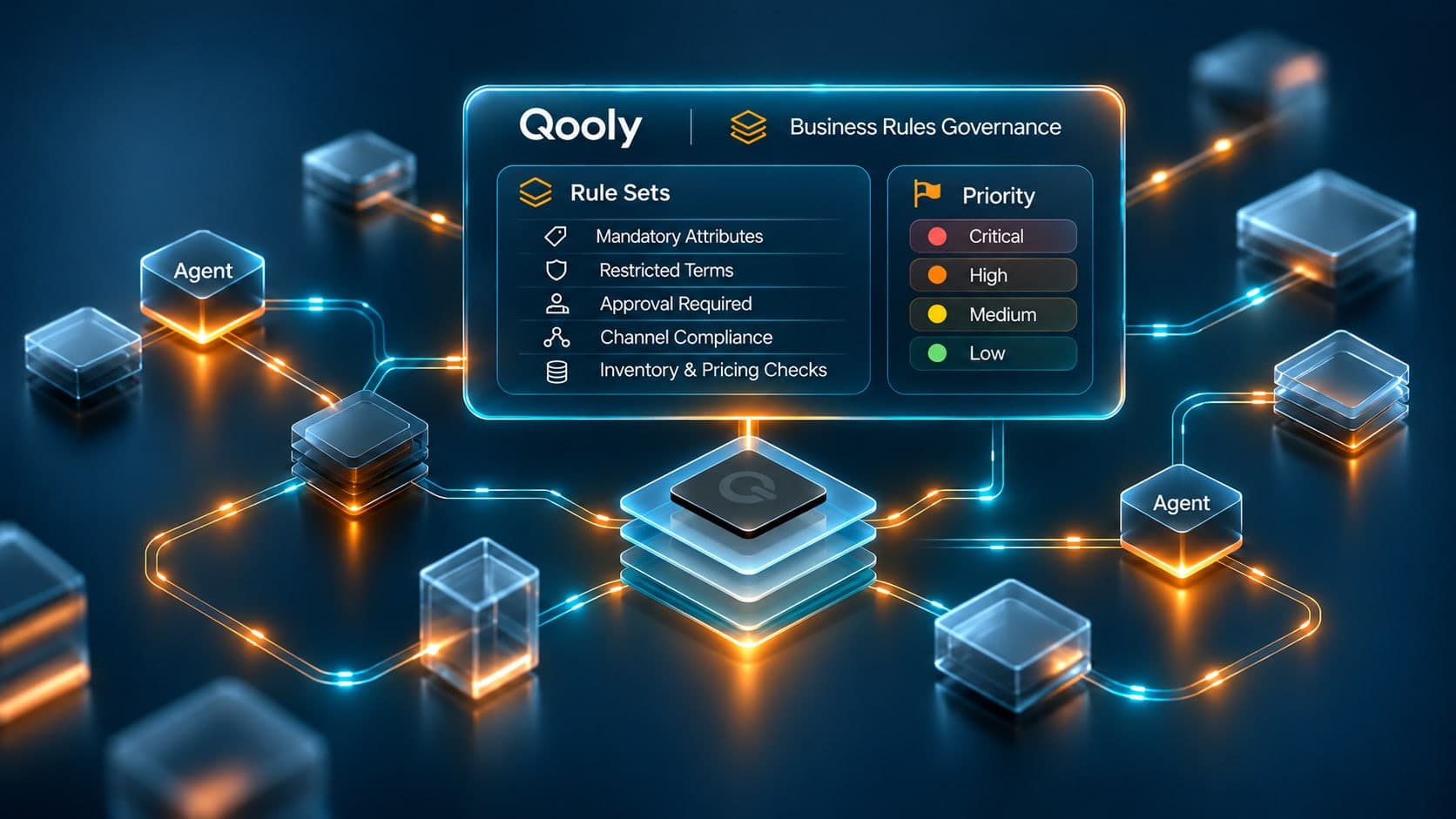
This is the model behind Qooly AI. AI agents divide the work, among them: Agent Flow validates and enriches, Agent Sync publishes, Agent Stock keeps available-to-sell accurate, Agent Price applies your pricing rules, and Agent Scheduler decides when each one acts. Your ERP stays the system of record for operations, and your team stays in control of what goes live.
Most teams that go looking for a PIM don't need one more system to maintain. They need product data that stays correct everywhere without a team moving it by hand. That means:
That is what Qooly AI, the Product Intelligence Platform, is built to do. Read more about why teams are moving beyond PIM, or see how Qooly AI compares with the best-known PIM tools.
PIM stands for product information management: the practice, and the software, used to collect, enrich, govern and distribute the information that describes products, such as titles, descriptions, attributes, specifications, images and channel-specific content.
An ERP runs operations: purchasing, inventory, finance and order processing, usually with a lean product record keyed on SKU and price. A PIM holds the rich, customer-facing product content an ERP is not built for, such as marketing copy, attributes, media and translations, and prepares it for sales channels.
Master data management (MDM) governs core business entities across an organisation, such as customers, suppliers, locations and products. PIM focuses on product data specifically, and on the commercial content needed to sell it.
Digital asset management (DAM) stores and governs media files such as photography, video and documents. PIM governs the product record those assets belong to. Many teams link the two so each product carries the right approved assets.
You likely need central product data governance if you sell through several channels, manage thousands of SKUs or variants, localise for several markets, or spend significant team time fixing listings by hand. The question is whether you need a place to store that data, or a system that also does the ongoing work of keeping it correct everywhere.
Qooly AI is a product intelligence platform. It covers the core of what a PIM does, one governed product record that is enriched and validated, and adds AI agents that publish to every channel, keep inventory and prices in sync, and act on your rules and approvals continuously. See it with your own data.
Keep reading