Operations
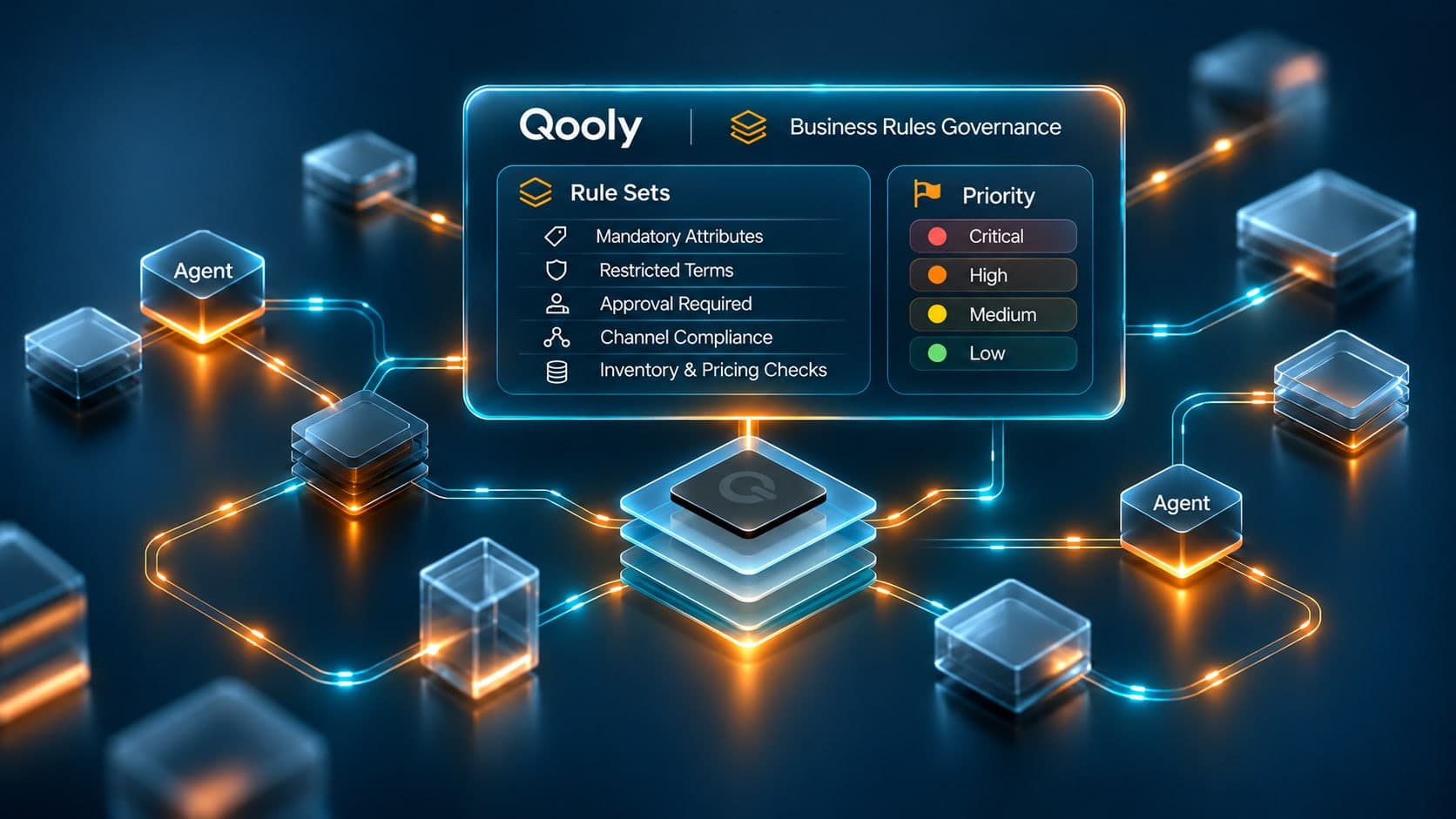
Governed AI: Why Product Data Needs Rules Before AI Publishes Anything
Qooly AI EditorialOctober 31, 2026 · 5 min read

Every commerce stack has two well-understood ends. On one side, the ERP runs the business: purchasing, inventory, pricing, finance. On the other, the channels sell: your storefronts, marketplaces, wholesale portals, ad and social channels, and now AI assistants.
What sits between them is usually not a system at all. It's spreadsheets, export jobs, scripts written by someone who has since left, and a team that spends its week moving product data from one end to the other and fixing what breaks on the way.
That middle is where a product intelligence layer belongs.
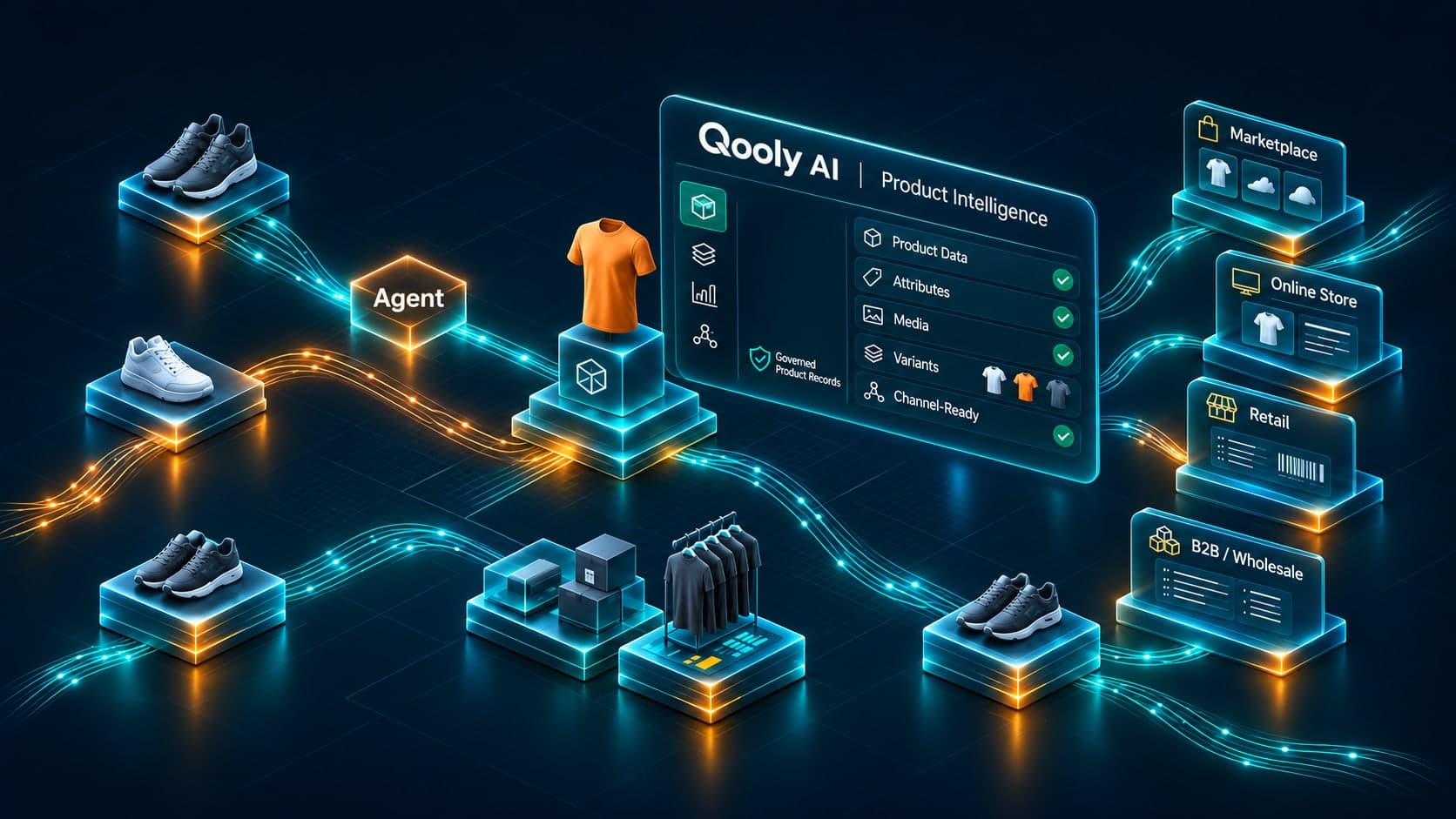
A product intelligence layer takes product data from the systems that create it and makes it correct, complete and live everywhere you sell. In practice that means four jobs:
The most common alternative is connecting the ERP straight to each channel. It looks simple, and it breaks in predictable ways:
A product intelligence layer replaces many fragile connections with one governed hub.
Qooly AI is built to be this layer. It connects ERPs such as SAP S/4HANA, NetSuite, Microsoft Dynamics 365 and Hitit on one side, and on the other the channels you sell through: storefronts, marketplaces, wholesale and EDI platforms, advertising and social channels, and AI assistants.
AI agents do the work in between:
Your ERP stays the operational backbone. Where supported, acknowledgements such as stock and price flow back into it, so both ends agree on what is live.
At Mavi, Qooly AI sits between SAP S/4HANA and more than 16 sales channels, including Shopify Plus storefronts, B2B channels, marketplaces, dropship platforms and retail stores. Barcodes and attributes are validated against SAP before anything publishes, so errors are caught before they reach a channel. Agent Stock processes more than 2 million inventory updates every day.
At 34 Heritage, the same governed records feed Shopify storefronts in the U.S. and Canada and NuORDER for wholesale, each in its own format. Product updates that used to take days now move through validation, enrichment, approval and publishing in under 30 minutes.
If several of these are true, the problem isn't any one channel. It's the missing layer in the middle. Read what a product intelligence platform is, or see the layer working on your own data.
A product intelligence layer sits between the systems that create product data, such as an ERP, and the channels that sell it. It holds one governed product record, validates it against your rules and each channel's requirements, enriches it with AI, and publishes and syncs it everywhere.
Point-to-point connections copy the ERP's lean record into each channel without enriching it, validating it against that channel's rules or keeping content, stock and price consistent across destinations. Every new channel adds another integration to maintain.
Where supported, yes. Qooly AI can send information such as stock and price acknowledgements back to the ERP, so the operational system stays in step with what is live.
ERPs such as SAP S/4HANA, NetSuite, Microsoft Dynamics 365 and Hitit; storefronts such as Shopify, BigCommerce, WooCommerce, Magento and Lightspeed; marketplaces, wholesale and EDI platforms; advertising and social channels; and AI assistants such as OpenAI, Gemini, Meta AI and Microsoft Copilot.
Keep reading