Operations
Governed AI: Why Product Data Needs Rules Before AI Publishes Anything
Qooly AI EditorialOctober 31, 2026 · 5 min read

Every integration is a liability.
That sounds harsh, so let's be precise. Every time you connect two systems, you create a dependency that has to be maintained, monitored, and repaired when either side changes, and both sides change constantly. Amazon revised its feed specs 14 times last year. Multiply that by the average commerce stack (12+ tools, 30-odd integrations) and you're running an IT department disguised as a product team.
Nobody budgets for the integration tax because it's smeared across departments. Put it in one place and it looks like this for a typical mid-market operation:
| Line item | Annual cost |
|---|---|
| Engineer time on sync failures and connector maintenance | £90 to 150K |
| PM/ops time reconciling data between systems | £60 to 100K |
| Middleware and iPaaS licences | £25 to 60K |
| Launch delays (revenue deferred 4 to 6 weeks per channel) | £40 to 120K |
| Sync outages during peak trading | £20 to 80K |
| Total | £235 to 510K |
That last line deserves attention. A pricing sync that fails on Black Friday morning doesn't cost you engineer hours: it costs you the morning. One apparel brand we spoke to lost six hours of Amazon sales because a connector silently dropped a currency field after a routine ERP update. Nobody noticed until a customer complained.
Here's what makes fragmented stacks genuinely dangerous: they don't fail loudly. A broken API throws an error. A drifting integration just quietly serves stale prices, old imagery, and last season's descriptions while every dashboard shows green.
The symptoms are familiar. Inventory says 200 units in the ERP, 170 in the product data system, 140 on the marketplace. Three systems, three truths, and a weekly meeting to argue about which one is right.
For each system in your stack: is it making us faster, or is it creating work that wouldn't exist if the system didn't exist?
A tool that needs three people to babysit it and causes two integration incidents a month is not infrastructure. It's overhead with a licence fee. Most teams, asked this question honestly, find that a third of their stack exists purely to compensate for the failures of another third.
The brands that have untangled their stacks share one move: they stopped adding point solutions and started asking what intelligence can replace.
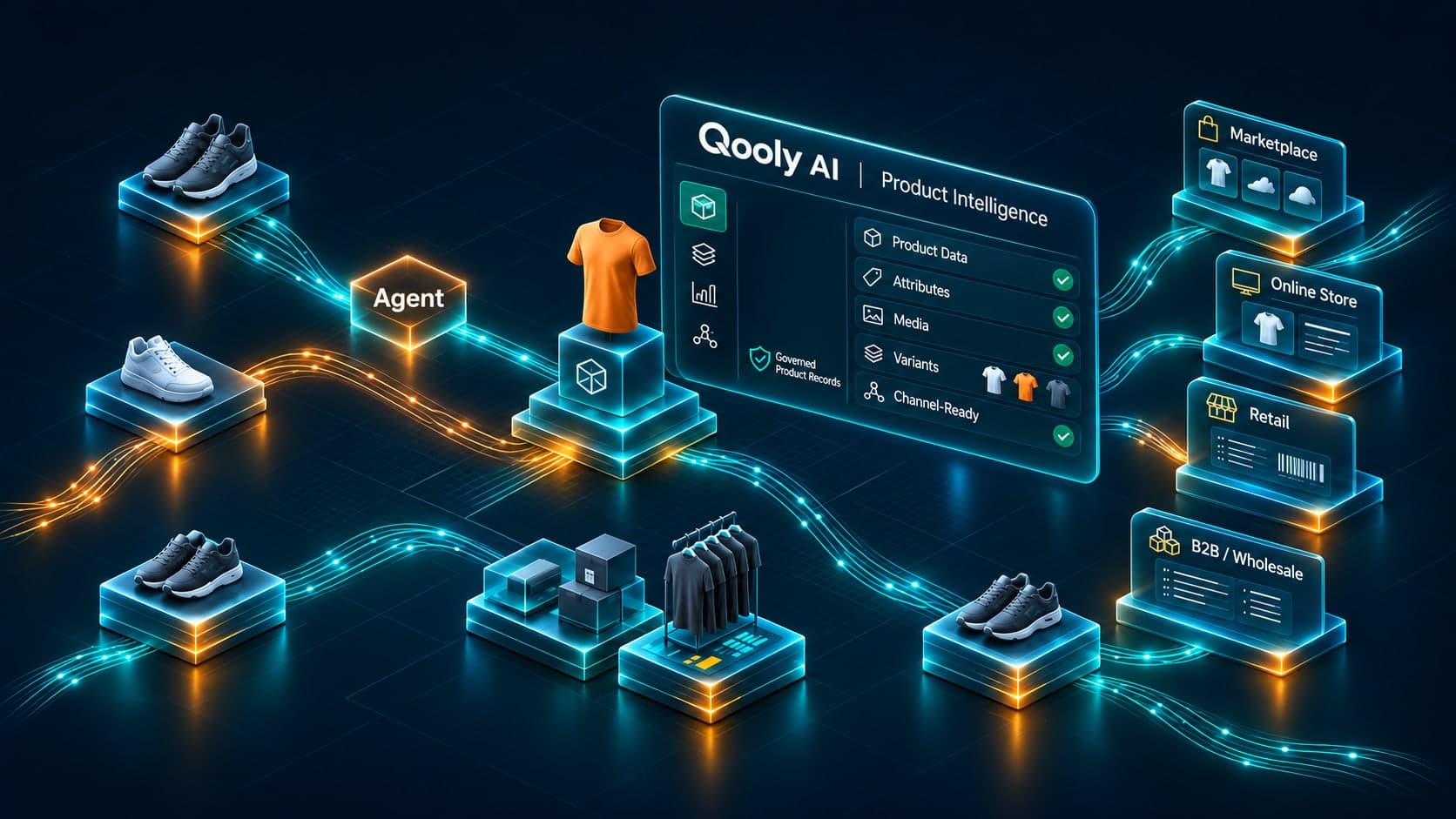
When your product data layer is AI-native (one system that ingests from any source, understands each channel's requirements, and pushes validated data everywhere), the integration tax largely disappears:
The fragmented stack wasn't a mistake. It was the best available option for a decade. It isn't anymore. Add up your own integration tax this quarter. The number is usually the entire business case for fixing your product data layer, before you count a penny of new revenue.
Keep reading