Commerce
Your Product Feed Is the Real Storefront
Qooly AI EditorialJuly 8, 2026 · 4 min read

The old product data stack was built on a reasonable assumption: that a catalogue is a thing you store, and the hard part is storing it well. One system of record, a clean taxonomy, a workflow for approvals, and a connector out to each place you sell.
That assumption held when you sold through your own site and one retailer, and updated things quarterly. It stopped holding the moment a product's data had to be different in fifteen places at once, and keep changing in all of them.
A system of record has no opinion about this. It holds what you put in it and waits. Everything between "the data is in the system" and "the right version of it is live on every channel right now" falls to people, which is why the team grew, and why nobody can quite explain what those roles do.
The licence is the visible line. The rest arrives in other budgets:
After all of it, the failure mode survives: mismatched listings, oversells, imagery two seasons old on a wholesale portal nobody checks.
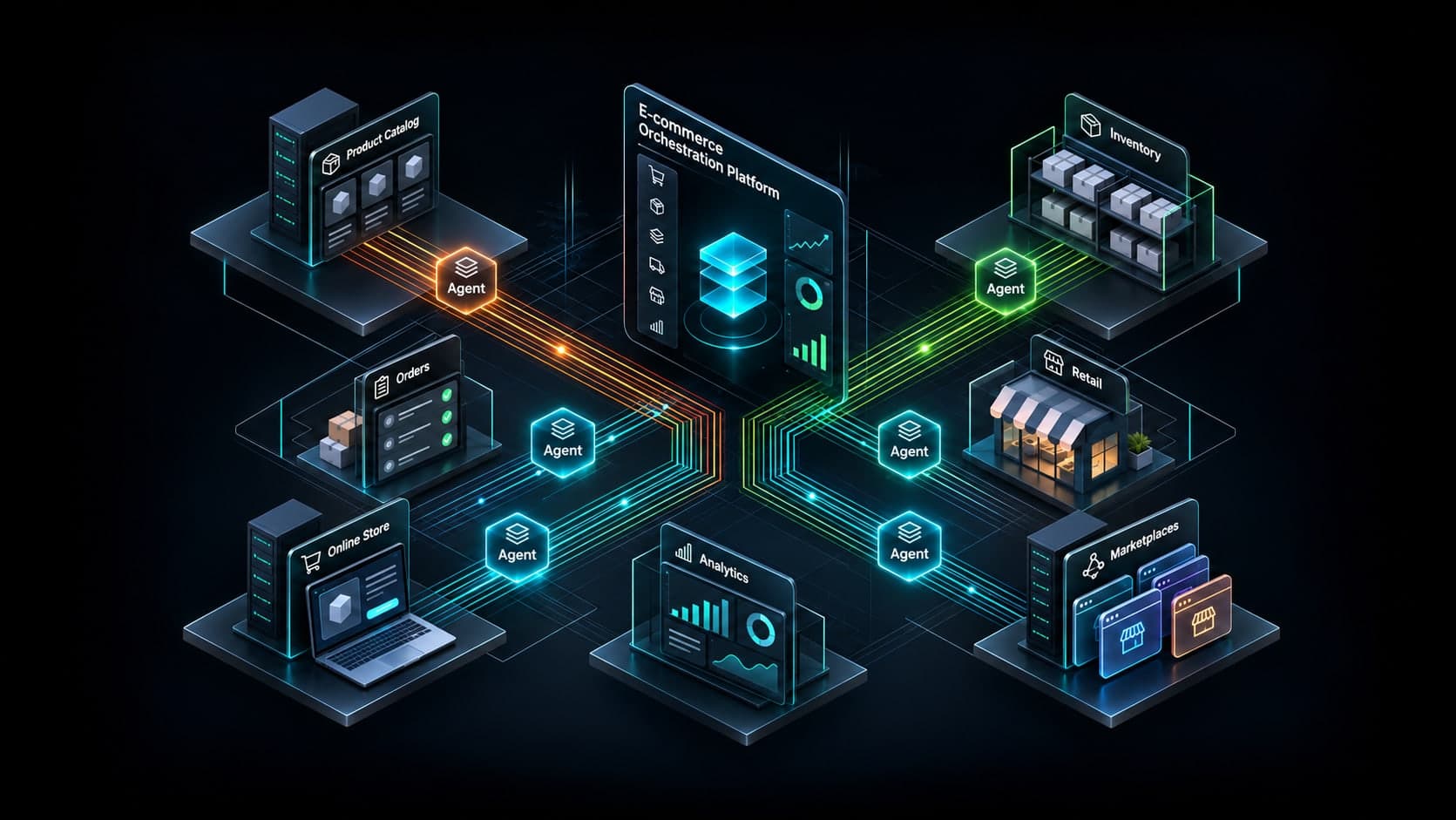
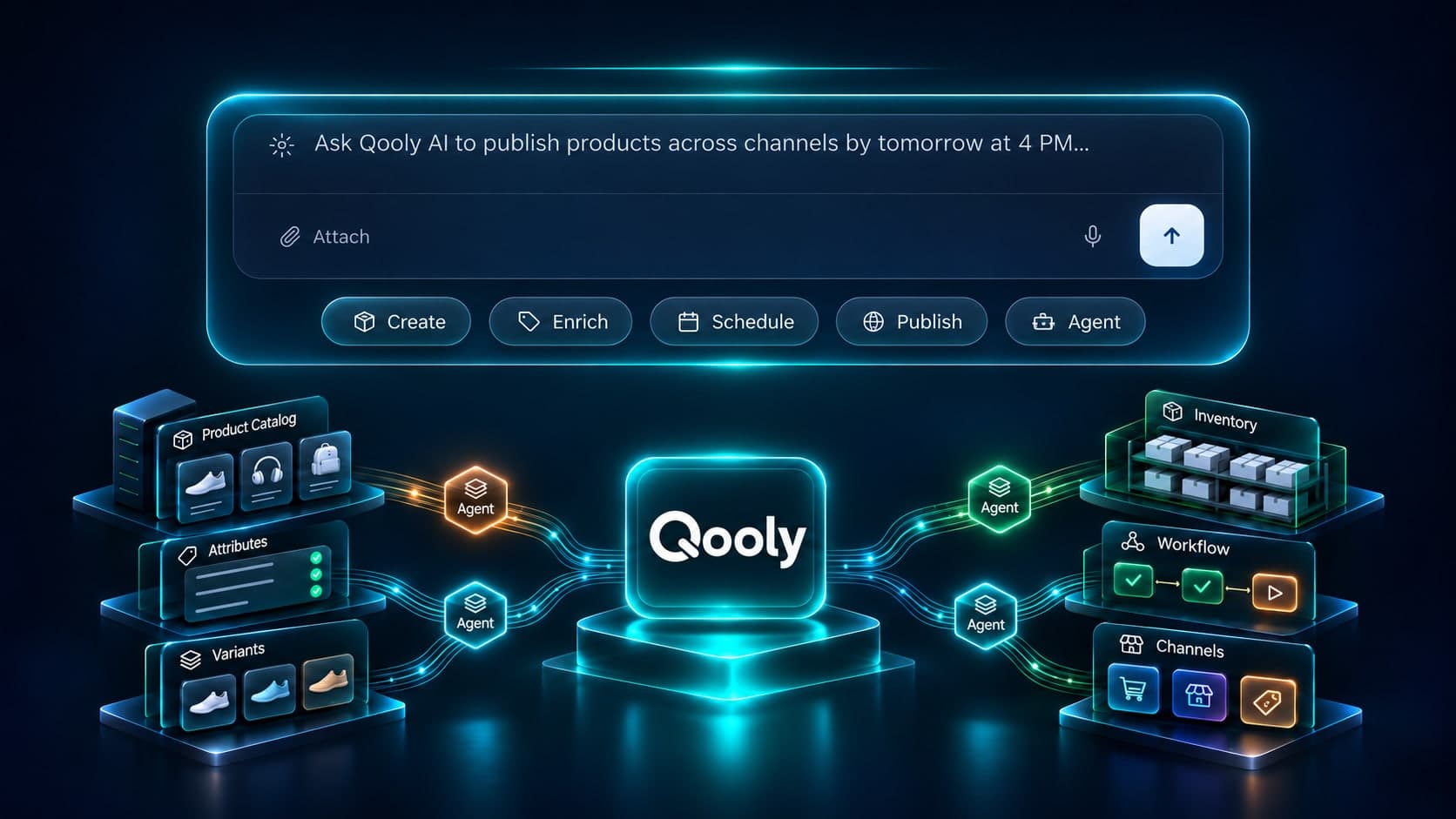
The replacement isn't a better system of record. It's software that performs the operations your team performs. In Qooly those are agents, each owning a job end to end:
That's the difference in one line. The old stack told you what was wrong. These do something about it.
| Legacy stack | Qooly | |
|---|---|---|
| Time to live | Months | Days |
| New channel | Connector project | Same day |
| Data quality | Checked at import, decays after | Enforced continuously |
| Enrichment | Manual, per SKU | AI, at catalogue scale |
| Who does the work | Your team | Agents |
Mid-contract, the switching cost feels like the obstacle. It usually isn't: the renewal is annual, and what it buys is slower launches and data that degrades between audits.
Product data stopped being a filing problem some years ago. It's an operations problem now, running continuously, in fifteen places, whether or not anyone is watching. Ask what your current stack actually does between the moment data arrives and the moment it's live everywhere. If the honest answer is "a person", you already know what replaced it.
Keep reading