
Commerce
The System of Record Is Dead. Agents Took the Job.
Qooly AI EditorialJuly 4, 2026 · 4 min read

Your team spent six weeks debating the homepage hero. Meanwhile, the majority of people who bought from you last month never saw it.
They met your product in a feed: a Google Shopping tile, a marketplace search result, an Instagram ad assembled from your catalog. The feed decided which image they saw, what the title said, whether the price looked current, and whether your product appeared at all. By the time anyone reaches your carefully designed PDP, the feed has already done the selling, or lost the sale.
Amazon starts more product searches than Google in most Western markets. Google Shopping, Performance Max, and social catalog ads are all rendered directly from feed data. For a typical multi-channel brand, 60 to 80% of first product impressions now happen inside someone else's interface, styled by someone else's template, populated entirely by your product data.
That makes the feed your real storefront. And most brands run it like a plumbing job.
Disapprovals and suppressions. Google routinely disapproves items over missing GTINs, mismatched prices, or absent shipping data. Merchants regularly discover 10 to 20% of their catalog silently suppressed: products that can't lose the auction because they were never in it. Nobody notices because a feed that's 85% live still "works".
Thin titles. "Everly Jacket" tells Google nothing. "Everly Women's Waterproof Shell Jacket, Navy, S to XL, Recycled Nylon" matches dozens of high-intent queries the first title never enters. In feed auctions, the title is your keyword targeting. Brands that rebuild titles from structured attributes typically see impression lifts of 30% or more on the affected SKUs.
Stale prices and stock. A feed that syncs nightly advertises yesterday's price all day. That's ad spend on clicks that land on a higher price, a conversion killer and, repeated often enough, a policy strike.
Missing attributes. Colour, size, gender, material, age group: every blank field is a filter you don't appear in and an audience segment the algorithm can't match you to.
None of the above is a marketing task. You can't write attribute-rich titles from a catalog with empty attribute fields. You can't sync prices in real time from a stack that batches exports overnight. The feed is downstream of the catalog: a broken feed is just broken product data, made public.
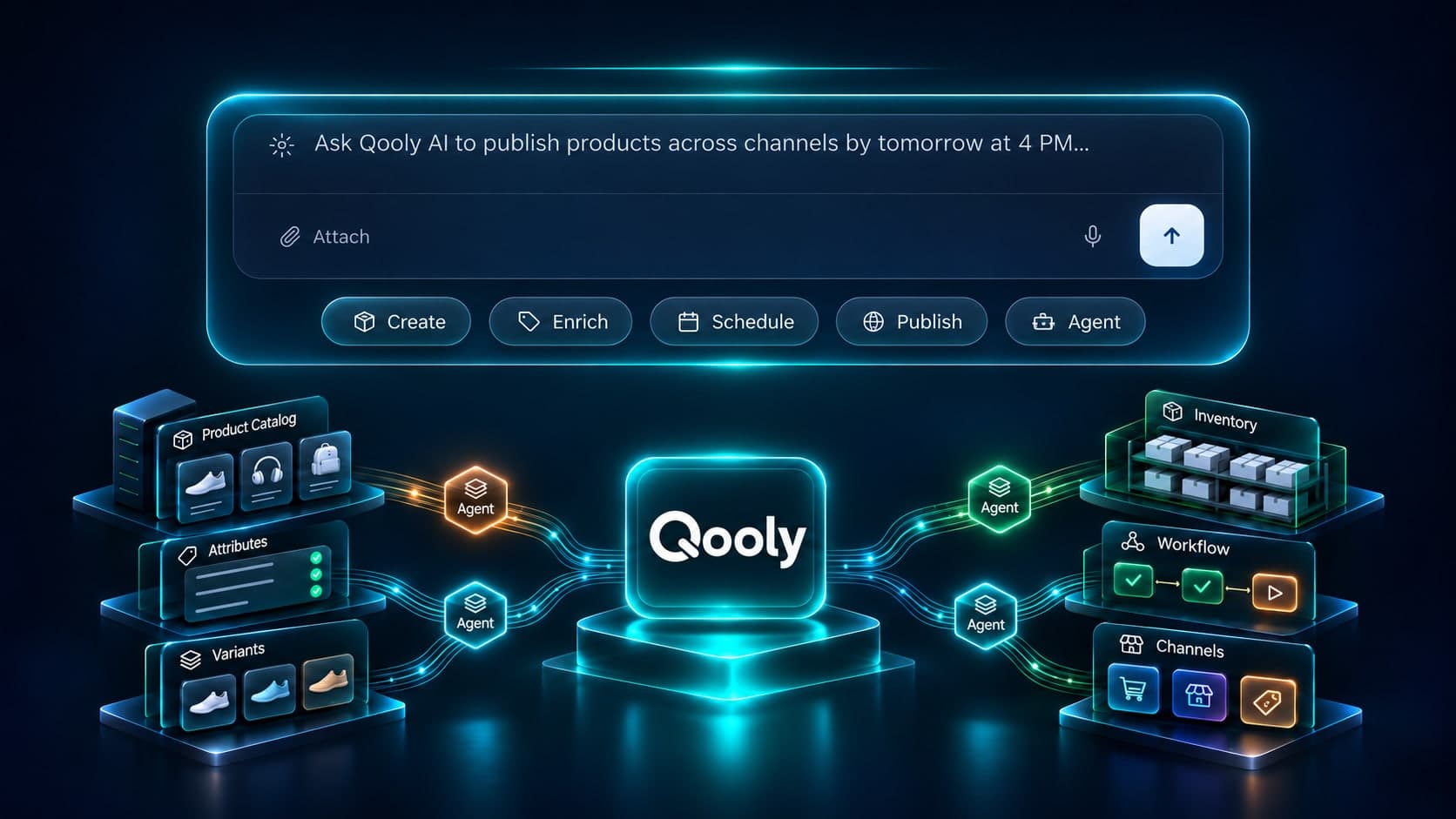
This is where an AI-native data layer earns its keep. Qooly fills the attribute gaps from imagery and supplier data, rebuilds titles to each channel's spec, validates every field against the channel's current requirements before submission, and pushes changes the moment they happen. The feed stops being an export and becomes a live rendering of a catalog that's actually complete.
Audit your own feed this week: pull the disapproved and suppressed items, count the empty optional fields, and check how old the prices are by mid-afternoon. That's your real storefront. Product data is what it's built from, and right now it's the highest-leverage surface you're not looking at.
Keep reading