AI
AI Agents for Ecommerce: What They Actually Do With Your Product Data
Qooly AI EditorialOctober 31, 2026 · 5 min read

A product intelligence platform is software that governs a company's product data, orchestrates it across every connected system and sales channel, and uses AI agents to do the ongoing work of keeping it accurate. Teams define the business rules once. The platform applies them to every product, every change and every channel, continuously.
It is a new category, and it exists because commerce changed faster than the tools behind it.
Ten years ago a brand might sell through its own site and a handful of retailers, updating product content a few times a season. Today the same brand sells on its storefronts, several marketplaces, wholesale portals, social commerce and, increasingly, through AI assistants that answer shoppers' questions. Each destination has its own taxonomy, required attributes, image rules and formats, and each one changes them regularly.
Storing product data well is no longer the hard part. The hard part is everything that happens after: completing it, checking it, reshaping it for each channel, publishing it, and keeping it right as prices, stock and requirements move. In most companies that work still falls to people, which is why product data teams keep growing while launches still slip.
A product intelligence platform is built to do that work.
1. Product data governance. One governed record for every product: attributes, variants, media, prices and channel content. Your business rules, such as required fields, formats, brand voice and claim boundaries, are part of the record, and every change is checked against them before it can go anywhere.
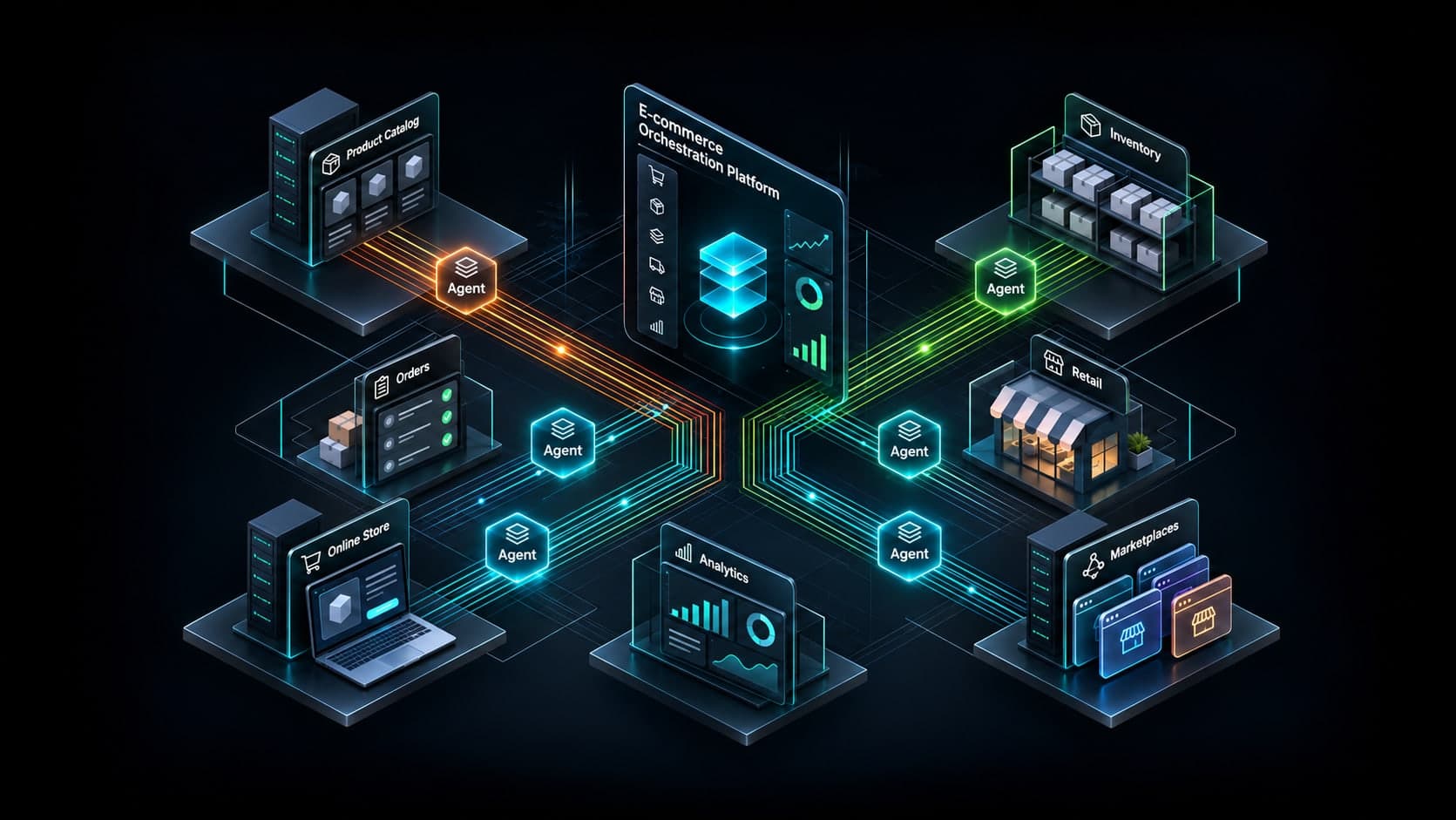
2. Intelligent orchestration. The platform connects the systems that create product data, such as the ERP, supplier files and other sources, with every destination that consumes it. It knows what each channel requires and reshapes the same governed record into the right format for each one.
3. Agentic automation. AI agents carry out the work: filling gaps, extracting details from images, writing channel content, publishing approved changes, keeping inventory and prices aligned, and deciding when each action should happen. People set the rules and approve what matters. The agents do the rest.
In Qooly AI, the flow from source to channel runs through four stages:
The work is divided between AI agents, among them Agent Flow, which runs the product data pipeline; Agent Sync, which distributes every change in each channel's format; Agent Stock, which keeps available-to-sell accurate; Agent Price, which calculates prices from your rules; and Agent Scheduler, which decides when work happens.
| ERP | PIM | Product intelligence platform | |
|---|---|---|---|
| Main job | Run operations | Store and approve product content | Keep product data right everywhere, automatically |
| Product record | Lean, operational | Rich content | Governed record with rules built in |
| Channel work | Not its role | Largely left to people and scripts | Done by AI agents |
| Inventory and price | Source of truth | Usually outside its scope | Kept aligned across every channel |
| Validation | Operational checks | Often at import | On every change, per channel |
The ERP stays the system of record for operations. The product intelligence platform sits between it and every channel, as the layer that turns operational data into sellable, governed, live product information. You can read more about where that layer fits and about how it compares with PIM.
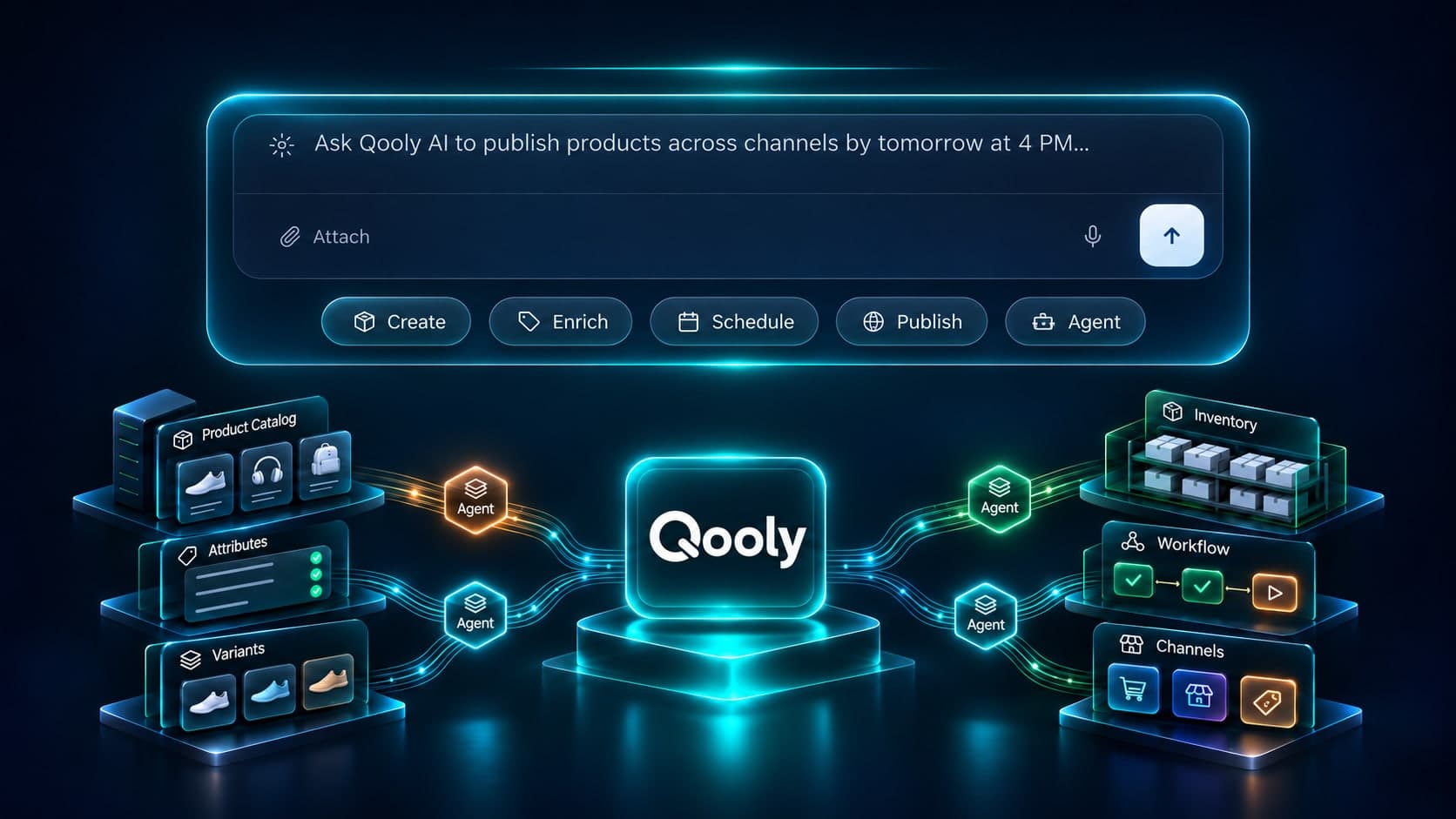
A product intelligence platform also changes how people use the software. Instead of navigating screens to find a field, teams can ask. In Qooly AI you can ask the assistant to find and fill missing attributes, extract details from product images, reshape content for each destination or publish updates across channels, and every request still runs through your rules and approvals. We cover this in detail in what you can do by chatting with Qooly AI.
Product intelligence pays off fastest for teams that:
Mavi, for example, governs more than 900,000 active SKUs across 16+ sales channels on Qooly AI, from SAP S/4HANA to Shopify Plus storefronts, marketplaces, B2B channels and retail stores.
A product intelligence platform combines product data governance, intelligent orchestration and agentic automation in one system. Teams define their business rules, and AI agents apply them continuously to keep product data accurate, complete and live on every channel.
A PIM stores and approves product information and leaves much of the ongoing channel work to people. A product intelligence platform keeps a governed product record too, then uses AI agents to validate every change, enrich content, publish to every channel and keep inventory and prices aligned.
No. The ERP stays the operational backbone for purchasing, inventory and finance. The product intelligence platform connects to it, turns its product data into governed, channel-ready records, and keeps every channel in step with it.
Brands, retailers and distributors that sell across several channels, manage large or complex catalogs, operate in several markets, or spend significant team time preparing and fixing product data by hand.
Qooly AI is the Product Intelligence Platform. It combines product data governance, intelligent orchestration and agentic automation in one modular platform, with AI agents such as Agent Flow, Sync, Stock, Price and Scheduler doing the work under your rules and approvals. See it with your own data.
Keep reading